
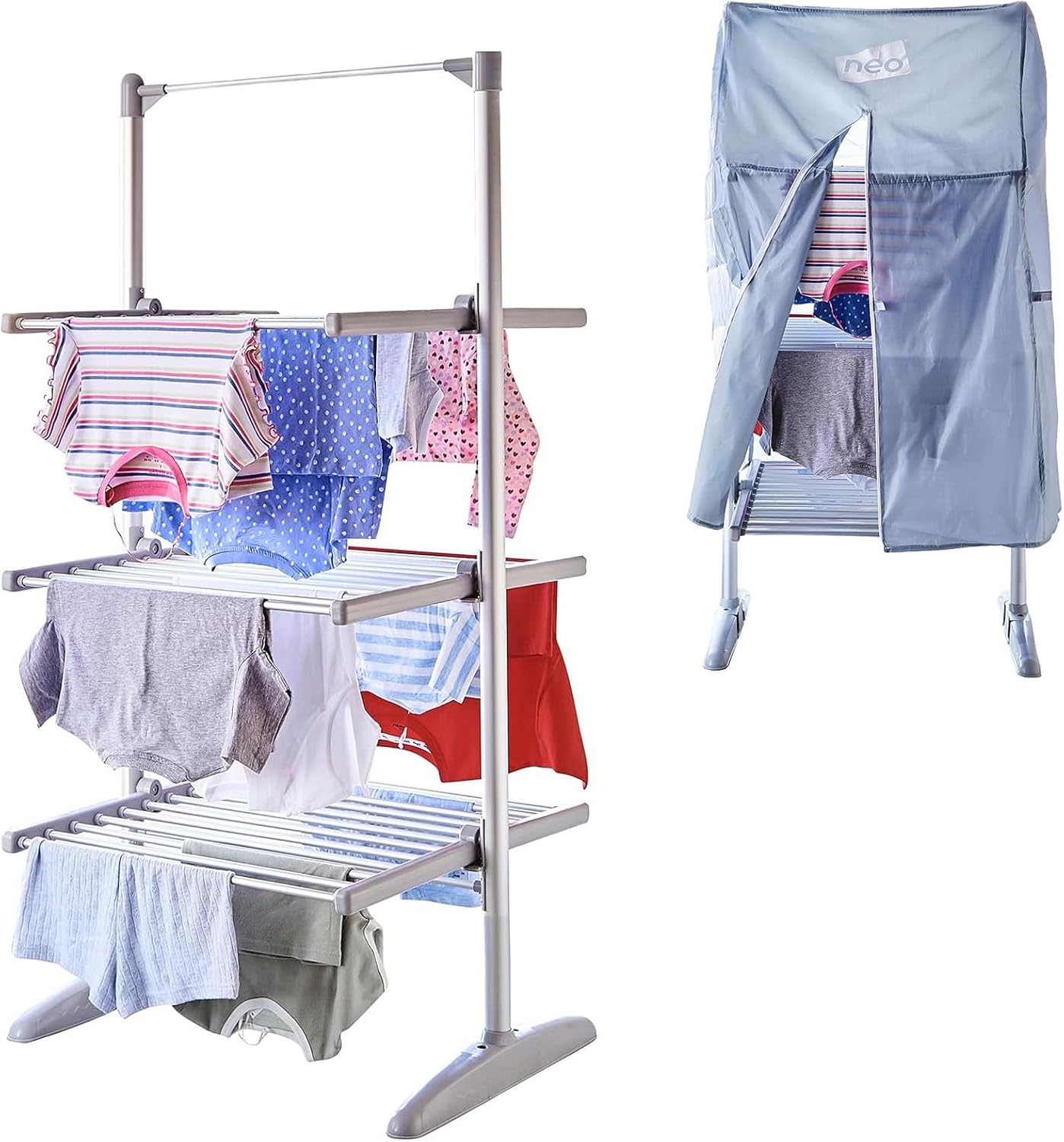
Neo XL Large Indoor Electric 3 Tier Airer Folding Foldable Laundry Clothes Horse Portable Heated Rail Rack Dryer Cover 36 Rails 147 cm…
Compare the listed features with your requirements
Check the listing and specs. Read the return terms. Always.
A curated comparison of four electric heated clothes airers on Amazon UK — from a 230W winged budget rack to a 36-rail three-tier — built entirely from retailer listings rather than lab tests, with per-hour running-cost maths and a moisture playbook thrown in.
Compare productsAs Amazon Associate we earn qualifying purchases. Links marked 'View on Amazon' affiliate links.
Research-based product information, not hands-on testing or a measured ranking. Check exact model details before buying.
| Pick | Best for | Rating | View |
|---|---|---|---|
| #1 Neo XL Large Indoor Electric 3 Tier Airer Folding Foldable Laundry Clothes Horse Portable Heated Rail Rack Dryer Cover 36 Rails 147 cm… | Compare the listed features with your requirements | /10 | View |
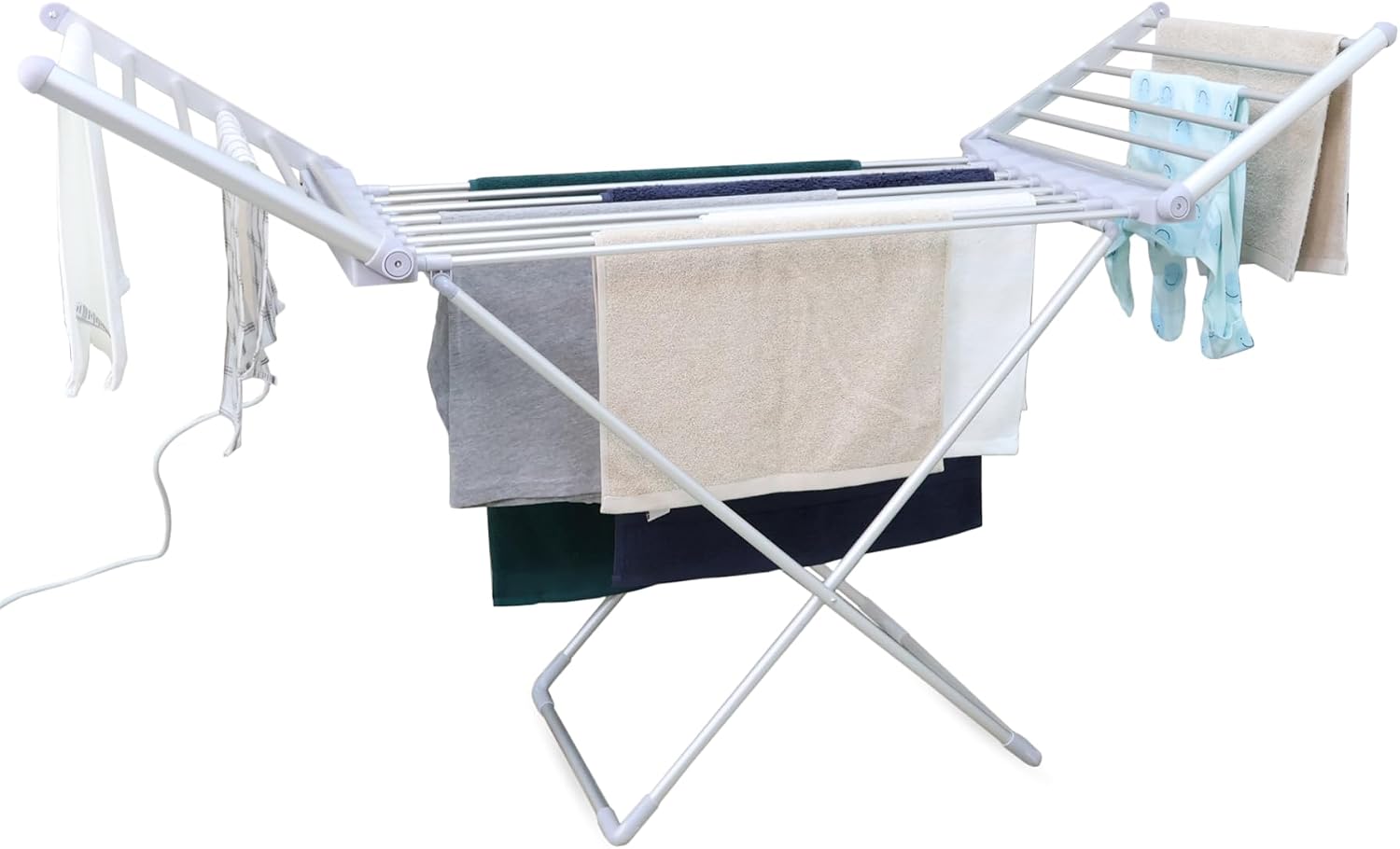
| #2 Rediffusion Clothes Airer, Winged, Electric, 18 Heated Rails, 12m Hanging Space,15kg Weight Capacity, Indoor Airer, Energy Efficient, 148 x 93 x 54cm, Silver - REDH02 | Compare the listed features with your requirements | /10 | View |
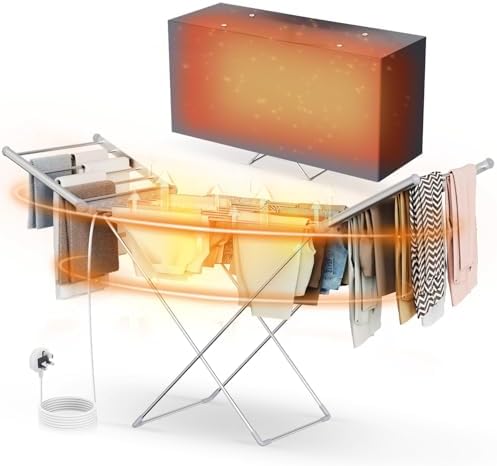
| #3 Heated Clothes Airer with Cover,Heated Drying Rack,for Damp Weather | Compare the listed features with your requirements | /10 | View |
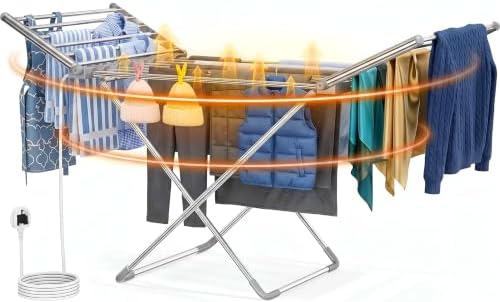
| #4 Airer Heated Winged Clothes Airer | Aluminium Clothes Drying Rack 230w Energy-Efficient 18 Heated Rails | Indoor Airer Low-Energy Laundry Dryer Stand | Compare the listed features with your requirements | /10 | View |
Compare the listed features with your requirements
Check the listing and specs. Read the return terms. Always.
Compare the listed features with your requirements
Check the listing and specs. Read the return terms. Always.
Compare the listed features with your requirements
Check the listing and specs. Read the return terms. Always.
Compare the listed features with your requirements
Check the listing and specs. Read the return terms. Always.
British winter kills outdoor drying. Your washing line becomes decoration. Your nearest radiator becomes a sock mountain.
A heated clothes airer attacks the problem at the source. Picture a low-wattage frame of warm rails, quietly drying your wash in the corner — gentle on fabrics, and a fraction of a tumble cycle to run. That's the pitch, anyway.
The spec sheets and running-cost sums mostly back it up.
One honest note: nobody here switched a single one on. This comparison leans on Amazon UK listings and manufacturer spec sheets, with ratings and prices quoted at the time of writing. Retailers shuffle things constantly, so treat every figure as a snapshot and click through before you buy.
Why only four picks? Ten-slot roundups pad their lists with near-duplicates. These four cover the market's real decision points — entry price, winged capacity, a bundled cover, and the big three-tier frame — and each earns its slot by answering a different household question.
The Neo XL Large Indoor Electric 3 Tier Airer is the volume option. Its listing specifies 36 heated rails across a 147cm three-tier foldable frame, a 4.3-star listing rating and a sales badge suggesting 2K+ bought in the past month. If your washing machine never rests, this is the frame the listed numbers point at.
The Rediffusion Winged Electric Airer (REDH02) is the spec-per-pound contender. The listing cites 18 heated rails, 12m of hanging space and a 15kg load capacity in a 148 x 93 x 54cm winged frame, at a mid-range price. Its 3.9-star listing rating is the lowest of the four, which is worth a pause: read recent buyer reviews before committing rather than trusting the spec sheet alone.
The Heated Clothes Airer with Cover takes a different route, bundling a fitted cover the manufacturer claims speeds up drying, alongside a listed 10kg capacity and the strongest listing rating here at 4.5 stars. The cover claim is the maker's, not a lab result, but the underlying physics is reasonable — a tent of warm air around wet fabric dries faster than open rails in a cold room.
The Winged Aluminium Heated Airer is the budget entry at the lowest listed price of the set. Its listing confirms 230W across 18 heated rails — the only wattage figure actually stated in this roundup — in a folding aluminium frame, rated 4.0 stars with a badge suggesting strong recent sales. It is the cheapest credible way into heated drying on this page, and the wings fold flat between washes.
Wattage drives everything else, so start there. Heated airers in this category typically sit somewhere between roughly 100W and 300W, and the 230W figure on the aluminium winged model is the only one confirmed across this shortlist's listings. Higher wattage means rails reach drying warmth faster, not necessarily a fatter bill, because a warmer rack finishes the job in fewer plugged-in hours.
Capacity is next, and the honest method is counting rails and metres rather than marketing adjectives. The Rediffusion's listed 12m of hanging space and 15kg capacity read like family territory, while a listed 10kg limit like the covered model's suits a couple's weekly wash. Wings earn their keep on laundry day and fold away the rest of the week, which matters if the airer lives in a hallway.
Then the arithmetic that decides it. At an illustrative 25p per kWh — check your own tariff, because rates move — a 230W airer draws about 6p of electricity an hour, so an eight-hour drying day costs roughly 45p. A vented tumble dryer cycle typically consumes somewhere between 2.5 and 4.5kWh, which lands between roughly 60p and £1.10 at the same illustrative rate. Pennies an hour versus pounds a load is the whole value proposition, and it holds whichever of the four you choose.
Two efficiency extras are worth real money: a fitted cover and an aluminium frame, since listings badge these as fast-heating. Treat wording like "energy efficient" and "low-energy" as manufacturer language rather than verified fact; the wattage number is the one figure you can actually check against the listing.
The four listings conveniently span four price points, which makes the comparison unusually clean. At the bottom, the 230W winged rack suits a single person or couple with a cupboard to hide it in between washes. The Rediffusion adds family-scale listed capacity — 12m of rail, 15kg — for not much more money, which is why its specs-per-pound stand out on paper.
The covered model spends its premium on claimed speed rather than size, pairing the highest listing rating with a cover that does the efficiency work. At the top, the Neo XL's 36 rails over three tiers answer a volume problem: households where the washing machine runs daily. The honest read is simple — small households lose little by buying cheap, but if you wash for three or more people, the larger frames save enough hassle to justify themselves quickly.
Whichever way you lean, spend on rail count and cover quality rather than brand names. The prices quoted here are snapshots, so check the live Amazon UK listing before deciding; the product cards on this page link straight to the retailer.
Here's what most guides skip: a heated airer works by evaporating water straight into your room. Dry a load a day without managing that moisture and you're feeding condensation. Streaming windows today, black mould next month.
The fix is routine, not a different gadget.
Start before the airer even switches on. Crank your washing machine to its highest spin — every extra drop it removes is water your rack won't pump into the living room. Then space everything out on the rack, no overlaps, and use the cover if your model came with one.
Close the door and run a dehumidifier in the same room. The airer adds moisture; the dehumidifier strips it out. Drier air pulls water from fabric faster, so your clothes finish sooner too.
Ventilation still matters in January.
Crack a window for ten minutes once the drying session ends. Never dry laundry overnight in a sealed bedroom — that's how you wake up to wet walls. Airer, dehumidifier, timed airing: that trio gets you through the whole damp season without a heat-pump dryer's price tag.
If you want one answer from listings alone, Rediffusion wins. The capacity you get for the price makes it the sensible default for most homes. But that middling 3.9-star rating says skim the recent reviews first.
No hands-on testing happened here, and nothing here replaces it.
The range splits cleanly. The 230W winged rack is your cheapest way in. The covered model tops the ratings at 4.5 stars, and the Neo XL wins on rail space when volume is the problem.
So treat this page as a shortlist tool, not a verdict. Keep two tabs open. Do the running-cost maths and either choice holds up.
Buy the size that matches your washing pile. Add a cover where one exists. Then let the dehumidifier finish the job.
Heated airers run much cooler than radiators. That part's true. But most makers still say switch off overnight or when you're out, and honestly? Fair enough. Read your manual. Keep the frame fully unfolded and stable, and never drape synthetics over the plug or controller. Melted fabric ruins everything.
Say your electricity costs about 25p per kWh. A 230W airer burns roughly 6p an hour. Run it eight hours and you'll spend about 45p. Cheap enough. A smaller 100W model runs at just 2.5p an hour. But don't trust my numbers. Pull out your bill and check — rates vary by region and how you pay.
Here's the simple physics. Warm air rises off the rails and, without a cover, drifts away into the room. A cover traps that heat around your clothes, which should cut drying time — on paper, at least. The £74.99 covered model on this shortlist bundles one. No shock there: manufacturers of covered models love quoting faster drying, and this is exactly why. But don't just drape a bed sheet over the frame. A fitted cover earns its keep. It seals the sides and keeps the heat where it belongs. A loose sheet leaks warm air through every gap and defeats the whole point.
Yes, almost always. A heated airer left on for eight hours costs about 45p at roughly 6p an hour. That's tough to beat. A vented tumble dryer can't compete. It burns through 2.5 to 4.5kWh per cycle, which lands between 60p and £1.10 at 25p per kWh. That's double, sometimes more. Heat-pump dryers close the gap on running costs, but they cost serious money upfront, so expect to wait years before you break even. One thing the raw numbers miss: gentle heat. An airer or warm rail handles wool and delicates far better than a spinning drum ever will. Your cashmere will thank you.
Only if you ignore the moisture. Every load of washing releases water into the air as it dries. That part is unavoidable. So take control of it. Run a dehumidifier in the same closed room while your laundry dries, then crack a window for a few minutes once you're done. And never dry clothes in a bedroom with the door shut. That's how mold problems start. Here's the thing though: done right, a heated airer paired with a dehumidifier beats draping wet clothes over radiators every time. Radiators release the same moisture, just far more slowly. You get all the damp and none of the control.
No hands-on testing. Manufacturer and retailer statements are claims from those sources, not independently measured results. Check exact models and current terms before buying.